

Görükle, Nilüfer / Bursa
Bursa Uludağ University New Mosque and Complex
Marble removal and aluminium composite balcony installation
- Marble removal from minaret balconies
- Aluminium composite balcony installation
- Balcony installation is ongoing
We offer rope access services on building facades, production facilities and high-rise buildings throughout Türkiye. Maintenance, installation, painting and repair works with our IRATA Level 3 certified technicians; We carry out our work with a business plan that includes site survey, team dispatch and technical handover.

Painting of high surfaces at TOGG, facade installation at TCMB, electrical and electronic applications at Istanbul Airport. Examine the scope of work in the projects we are involved in.
Görükle, Nilüfer / Bursa
Marble removal and aluminium composite balcony installation

Istanbul Financial Center
Facade assembly and technical applications

Gemlik, Bursa
Paint application at height

Arnavutköy, Istanbul
Electrical and electronic system applications
Facade lighting and shaft works at BRSA. Mechanical installation access at THY Cargo. Lifeline and facade maintenance in Business Istanbul.
Check out our other worksRope access is an access method that enables cleaning, maintenance, repair, assembly and control by reaching a high or hard-to-reach working point with rope systems. Also known as industrial rope access. Method selection; It is done by evaluating the geometry of the structure, duration of the work, materials to be transported and site conditions.
Olimpos Endüstriyel, with its Istanbul-based team, plans access and technical application in high-rise building facades and industrial facilities throughout Türkiye. The dispatch of the team and equipment to the field, the work schedule and field permits are clarified during the site survey and proposal phase.
Rope access, scaffolding and aerial work platform comparisonRope access; It enables maintenance, assembly, cleaning and technical applications to be carried out in high, narrow or complex structures with minimum space occupation. Olimpos teams handle each operation with an access plan, risk assessment and rescue scenario.
End-to-end operation support for plaza and facility managers, technical directorates, main contractors and institutions that want to have maintenance, installation, cleaning or control at a point that is difficult to access.
Access, maintenance and technical application plans that consider building use on plaza, residence, hotel and tower facades.
Technical intervention in difficult-to-access areas in factories and production facilities, in compliance with production and OHS procedures.
Coordination of difficult-access control, maintenance and technical works with field procedures in energy production and transmission structures.
Access plans suitable for intense operation conditions with wide spans in airports, bridges, viaducts and towers.
In projects where building entrances, production lines or pedestrian traffic cannot be closed for a long time, work with lower area occupation can be planned.
Façade geometry, ground bearing capacity or obstacles around the structure may limit the use of mobile platforms and baskets.
Control, maintenance or assembly points located on different floors and axes on a facade can be divided into stages.
Pre-work planning and post-application photographs and field records can be collected in the same workflow.
Working and safety lines are constructed independently of each other; anchors and access route are determined according to site conditions.
A controlled area is created by evaluating pedestrian and vehicle traffic, material fall risk and the ongoing operation of the facility together.
Access technicians are organized according to the expertise required for the maintenance, installation, cleaning or inspection job to be performed.
The type of structure, working points, access obstacles, scope of work and site rules are examined.
Anchors, rope lines, team organization, subarea isolation and rescue approach are determined.
Work is carried out according to planned stages and shifts; Regular coordination is ensured with field managers.
Completed points are checked; Visual and technical records within the scope are arranged for delivery.
In the industrial rope access offer, evaluate separately the technical work to be done with access to the working point. Glass cleaning, façade installation and inspection do not require the same equipment, expertise or scope of delivery. The work quantity, material supply, access method and delivery records must be defined in the same way in the offers you compare.
Mobilization and working hours of a plaza in Istanbul and a facility outside the city may be different. Clarify at the outset how scouting, site permits, building hours of use, and schedule changes due to weather conditions will be handled. When examining references, look not only at the name of the building, but also at the work the company has undertaken in that project.
For the final offer, access conditions and the work to be done are evaluated together. The main issues affecting the cost of this service are:
Anchor locations, roof access, façade geometry and number of rope lines affect the crew plan.
The expertise, equipment and supplies required for cleaning, installation, repair or inspection vary.
Height alone is not enough; The distribution of intervention points and the need for mobilization are also evaluated.
Night shifts, weekend work, production shutdowns or special leave processes may change the bidding plan.
When selecting a team for your project, we evaluate the technicians' IRATA documents and their experience in the technical work to be done. Level 3 surveillance, access and rescue plan, work phases and delivery records are part of this preparation.
Include in your request for quotation the location of the structure, its approximate height, the work to be done, and your target work date. Your requests for available photographs, site rules, and personnel documentation help us plan the survey and assignment.
Our team's verified Level 3 documentsFor information on IRATA technician certification, level and company membership our document verification guide .
Depending on the project scope and schedule, we can provide approximately 3 to 60 personnel. We agree on team size, technical skills and shifts during the site survey and quotation stage.
It can be used in cleaning, maintenance, assembly, painting, sealing, control and technical applications at high or difficult to access points. Suitability is determined by evaluating job and site conditions together.
No. The duration of the job, the size of the work area, the material load and the façade geometry determine the access method. In the site survey, the suitability of rope access, platform or other methods is compared.
Yes. Our Istanbul-based team provides services for projects across Türkiye. site survey, team and equipment dispatch, transportation, accommodation if necessary, and work schedule are determined at the proposal stage according to the project scope. Our TOGG production facility work in Gemlik, Bursa is one of our project examples outside Istanbul.
Not every project requires full closure. Sub-area security and work stages are planned to affect the building or facility operation as little as possible.
The location of the structure, its approximate height, the work to be done, photographs of the working points and site rules, if any, are sufficient for the initial evaluation.
Photographic or technical handover records containing completed areas, field findings and application images can be prepared according to the project scope.
ON SITE
Access examples from facade installation, airport technical works, TOGG paint application and BRSA facade work.

Rope access team working together on the high glass façade
Rope access work on the high ceiling of the terminal

Access between high steel carriers at TOGG facility
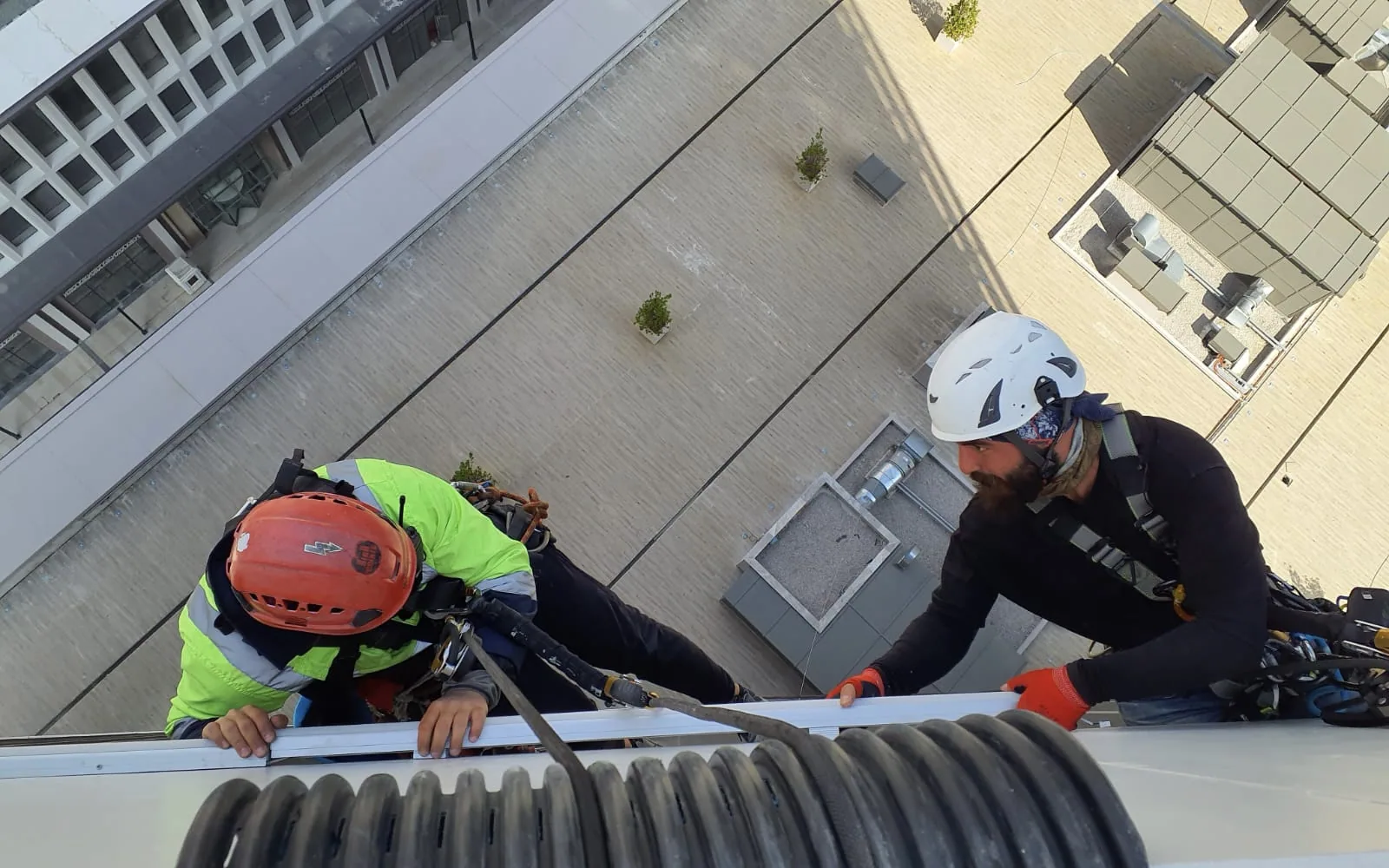
Two technicians working together near frontline equipment
Our Istanbul-based team supports high-rise, industrial and infrastructure projects across Türkiye. Share the location, scope of work, access conditions and target date so we can plan the survey, crew and equipment for your project.
Painting high panels at TOGG Gemlik, Electrical and electronic applications at Istanbul Airport and Facade installation at CBRT Tower are examples of our work on different types of structures.
Work dates and crew allocation are agreed once site permits, access conditions and the scope of work have been confirmed.
Request a site surveyStart with the location, building type, approximate height, scope of work and site photographs. We review this information remotely, then agree on site access and any survey required.
We plan the technicians, equipment, transport and any accommodation required. Site entry documents, work permits and setup time are included in the quotation scope.
We schedule work around production or building occupancy. Together, we agree on the scope, inspection criteria and handover records, alongside the access and rescue plan.
When evaluating the rope access team, who owns the document, its validity and the task to be undertaken at work are examined together. You can check from official records.
Read the guideThe rope access offer includes not only building height; The lines to be installed, technical work, intervention points, shifts and delivery scope are calculated together.
Read the guideThe correct access method is not selected based on building height alone. The scope of work, facade geometry, ground and material load are evaluated together.
Read the guideSafe facade cleaning of plazas, residences and commercial buildings with methods suitable for the surface.
Access, repair and application services against water and air leaks at facade joints.
Controlled assembly of steel, mechanical and electronic equipment in hard-to-reach points.
Safe working access for non-destructive testing teams on difficult-to-access structures and equipment.