

Istanbul Financial Center
CBRT Tower
Facade assembly and technical applications
- Glass, facade module and solar shading installation
- Technical applications in metal connections
Controlled assembly of steel, mechanical and electronic equipment in hard-to-reach points.
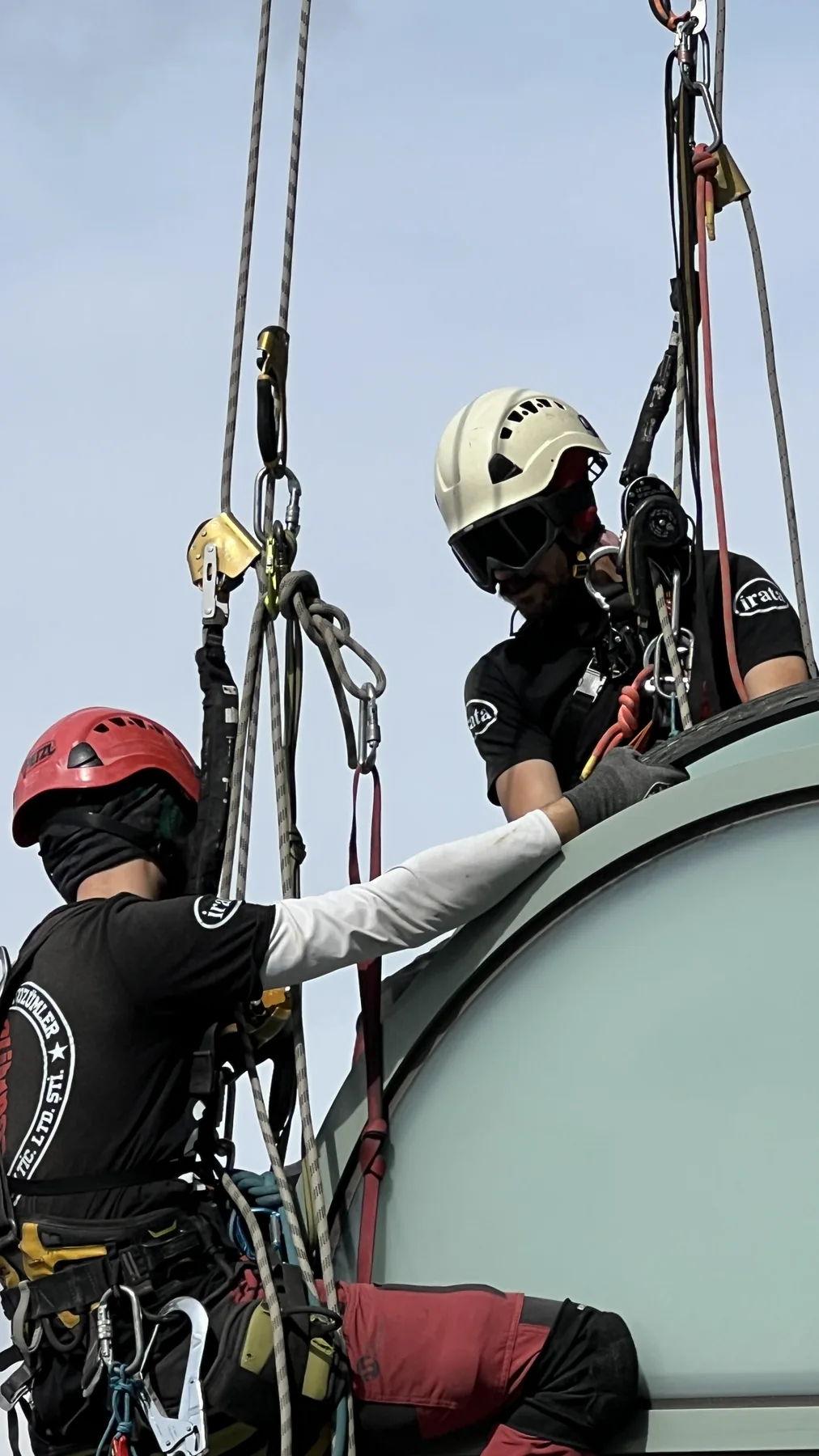
In high-altitude installation operations, load control, tool safety and application order are as important as access technique. Olimpos creates the reach, lift and torque plan together according to the mounting point and the features of the part.
Application support for main contractors and technical operation teams who need equipment installation, connection control and torqueing on facades, steel construction, towers, facilities or high ceilings.
Steel construction connections
Lighting, camera and sensor installation
Signboard and facade elements
Mechanical equipment and pipe supports
Floor, façade geometry or plant equipment may limit machine access to the working point.
Equipment weight, lifting route, attachment sequence and tool safety are planned together.
A delivery record can be created by following the application points with equipment appropriate to the scope of work.
Installation work can be divided into stages according to the usage hours of the building or facility.
Rope lines, material route, backup and connection points are determined before application.
Hand tools and assembly parts are backed up against falling; The sub-area is organized as a controlled work zone.
The assembly sequence, manufacturer or project requirements, and torque values, if applicable, are coordinated with the field team.
Part, connection point, height, access and project documents are examined.
The team, rope lines, lifting equipment, teams and sub-area plan are prepared.
The application is executed in a controlled manner according to the specified sequence and connection requirements.
Completed points are checked; Photographs and torque records are prepared within the scope.
We worked on the installation of facade modules and sunshades at the CBRT Tower. At THY Cargo Buildings, our duty was to provide rope access to the technical team who would make repairs in hard-to-reach mechanical installation points.
In the quote request, state who will supply the part, who will make the connection, and whether you want access support only or assembly as well. If torquing is desired, include the connection list, approved torque values if any, and expected delivery record.
For the final offer, access conditions and the work to be done are evaluated together. The main issues affecting the cost of this service are:
Weight, size, connection type and torque requirement affect equipment layout.
Roof access, anchors, working height and part transport distance are evaluated.
The number of assembly points, shifts, leave and mobilization conditions determine the duration.
The scope of photo delivery, point list and torque records is defined in the quotation.
Facade elements, signboards, lighting, cameras, sensors, cable carriers and suitable mechanical parts can be evaluated. Part weight and assembly conditions are examined during site survey.
Depending on the project scope and the equipment to be used, application points, target values and completion records can be recorded in the delivery document.
For each piece, weight, lifting route, anchorage capacity and rescue approach are evaluated separately. For unsuitable loads, a crane or other method is planned.
The lower area is checked against the risk of material falling. The area and time to be covered are limited as much as possible by the work stages.
Part properties are calculated after site survey based on quantity, access setup, connection method, working hours and reporting scope.
ON SITE
Installation examples on facade panels, metal connections and sign holders. The photos show the position of the part at the point of operation.

Installation and positioning of the façade panel

Rope access team working together on the high glass façade

Installation and positioning of the façade panel
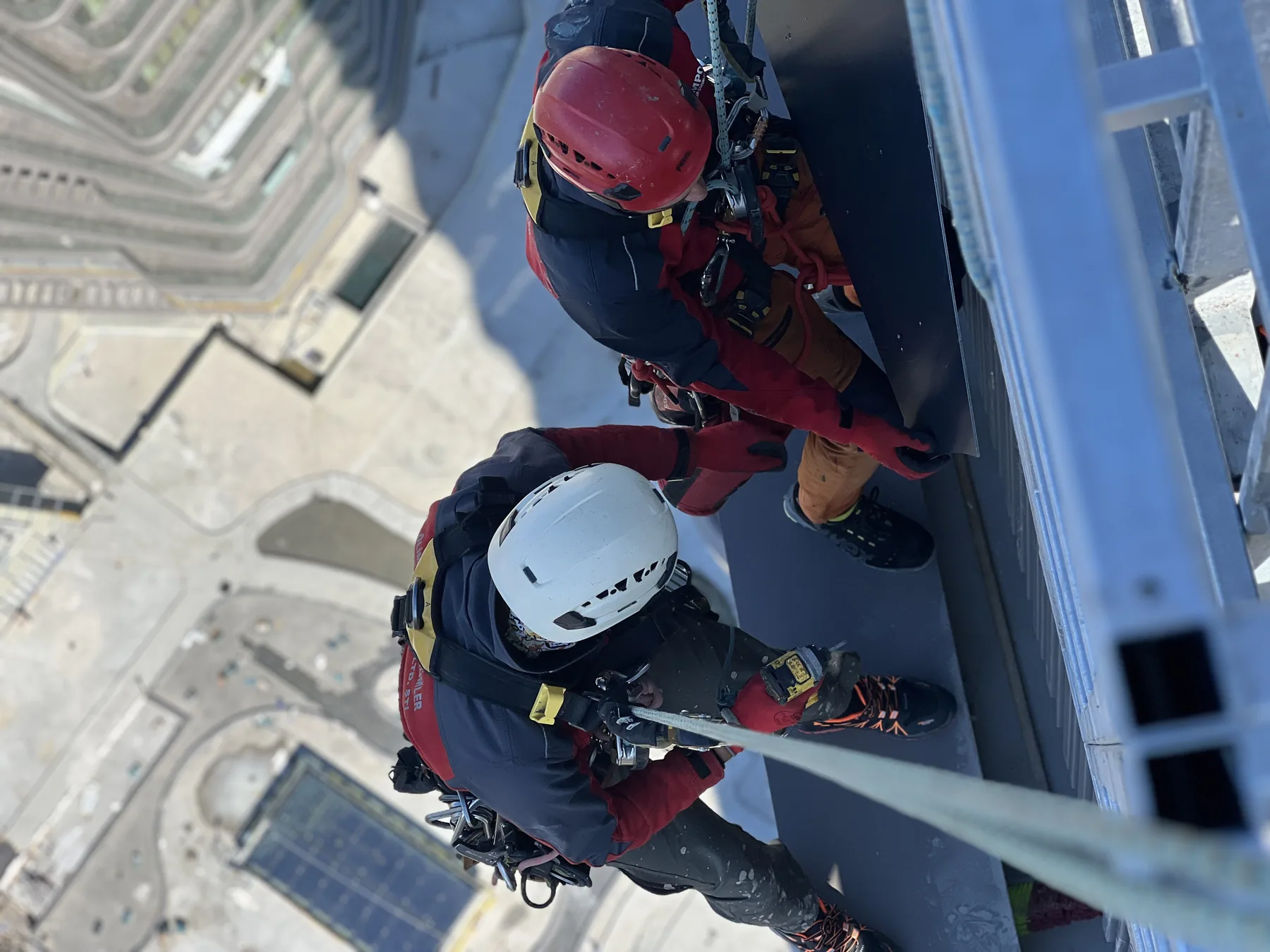
Installation of high-rise sign holders
Review project scopes with relevant work items.
Istanbul Financial Center
Facade assembly and technical applications
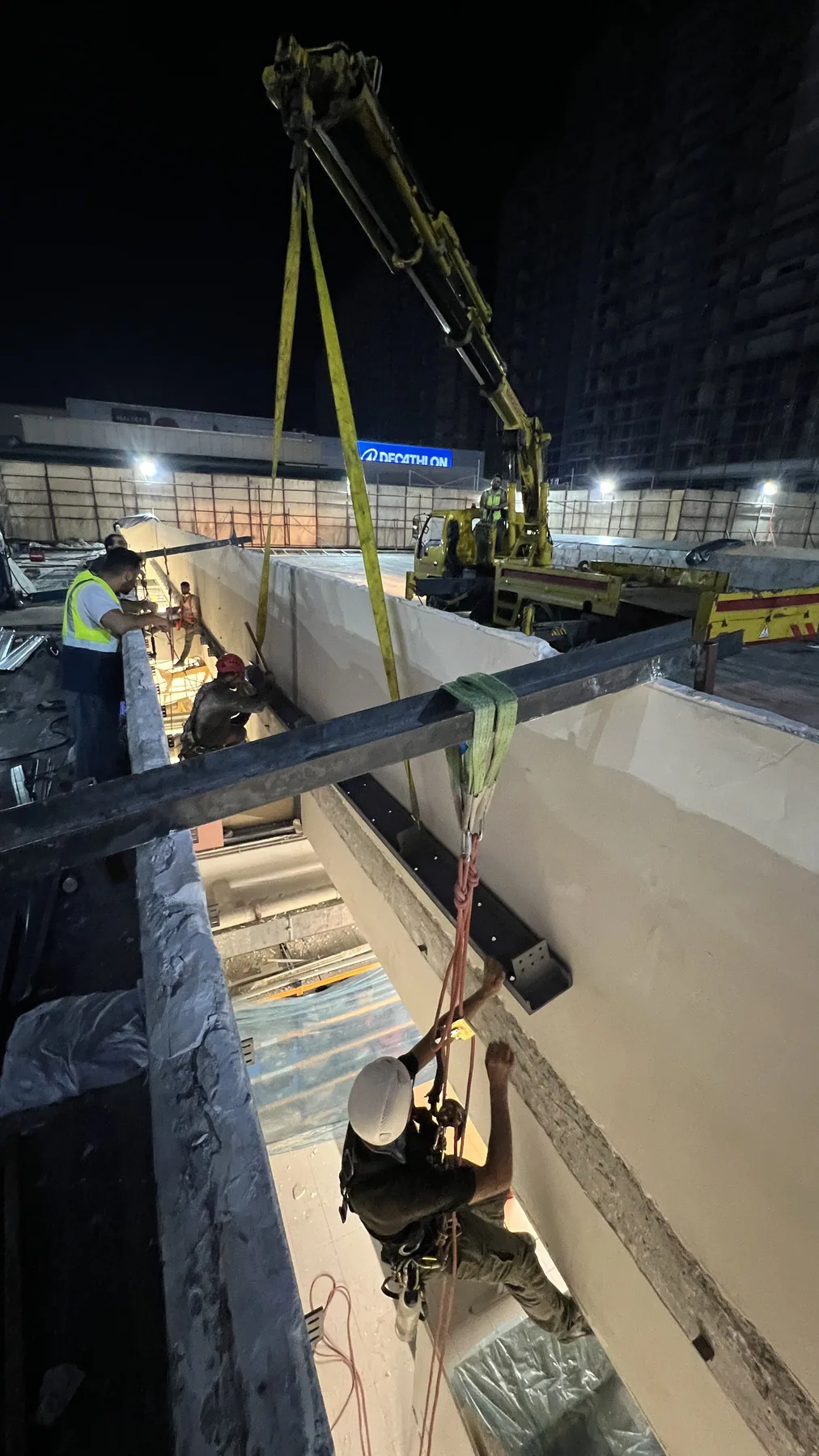
Shopping mall areas
Indoor access and technical installation
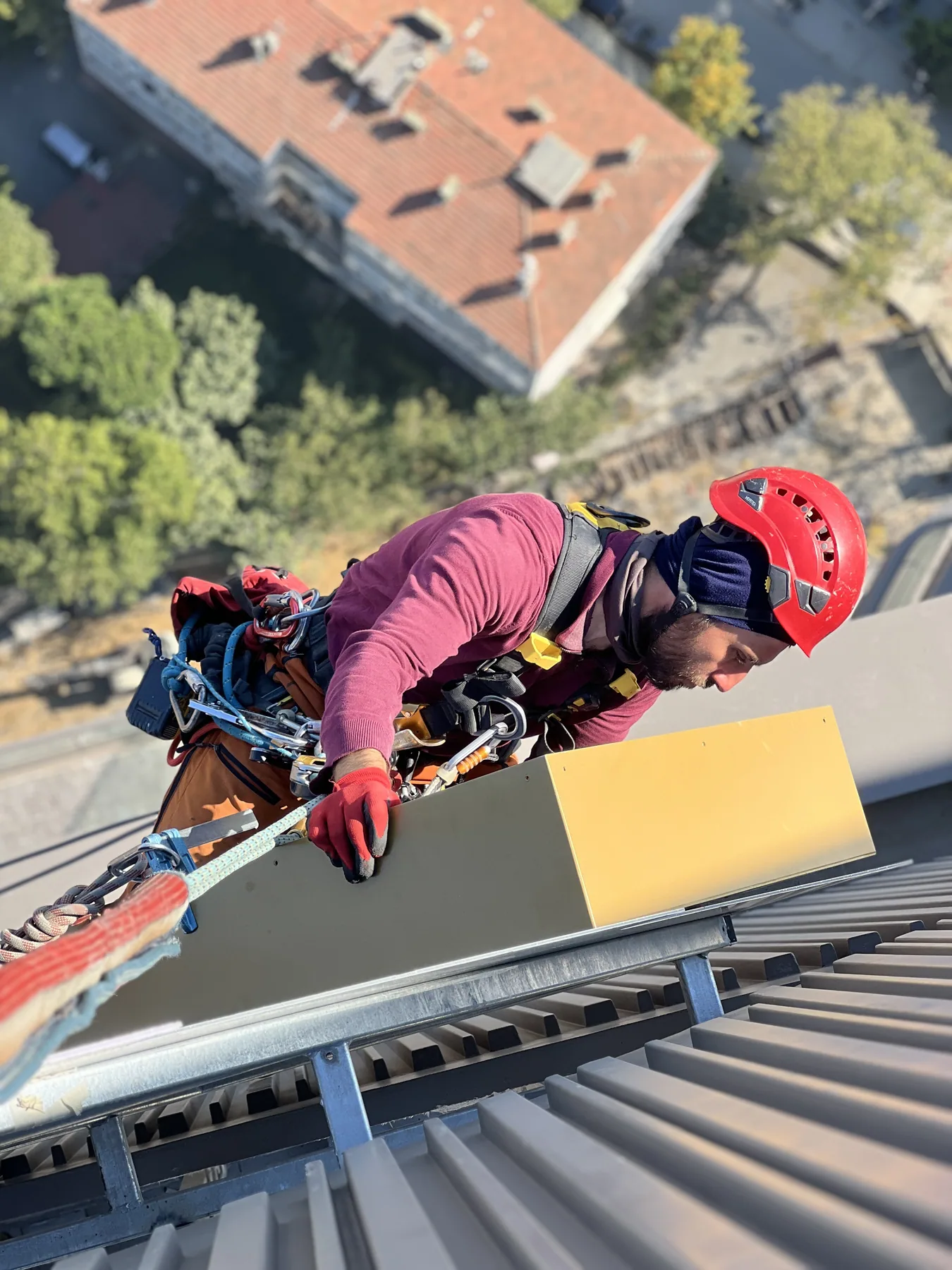
Facade and commercial areas
Sign, carrier and advertising surface applications
When evaluating the rope access team, who owns the document, its validity and the task to be undertaken at work are examined together. You can check from official records.
Read the guideThe rope access offer includes not only building height; The lines to be installed, technical work, intervention points, shifts and delivery scope are calculated together.
Read the guideThe correct access method is not selected based on building height alone. The scope of work, facade geometry, ground and material load are evaluated together.
Read the guideElectrical infrastructure, armature and cable applications on facades, towers and high ceilings.
Controlled installation of cameras, sensors, antennas and communication equipment at high points.
LED module, line and lighting installation in architectural facades, signs and high-rise buildings.
Maintenance support on high and difficult-to-access mechanical equipment, connections and steel elements.